
Yellowjacket Control in Southwest Michigan, Indiana and the Greater Louisville Region
Yellowjackets are one of the most common and aggressive stinging insects homeowners encounter during the warmer months. While they play a role in the ecosystem by pollinating and feeding on other insects, their aggressive behavior and painful stings can quickly turn them into a serious nuisance around homes, businesses, parks, and outdoor gathering spaces.
At Franklin Pest Solutions, we provide professional yellowjacket control throughout Southwest Michigan, Indiana, and the Greater Louisville region. Whether you’ve discovered a nest in your yard or are seeing increased yellowjacket activity around your property, our team can help identify the source and recommend an effective solution.
What Is a Yellowjacket?
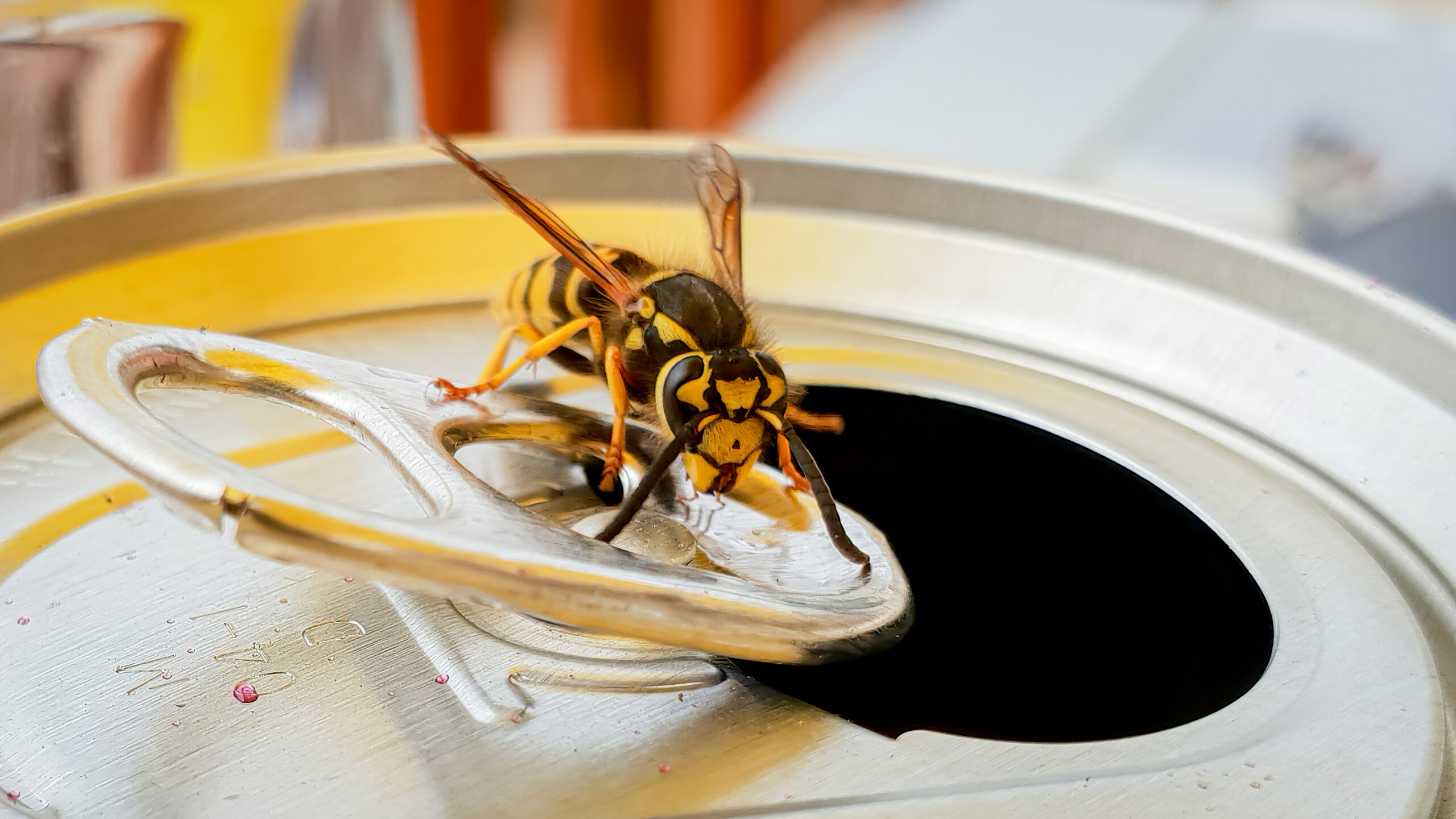
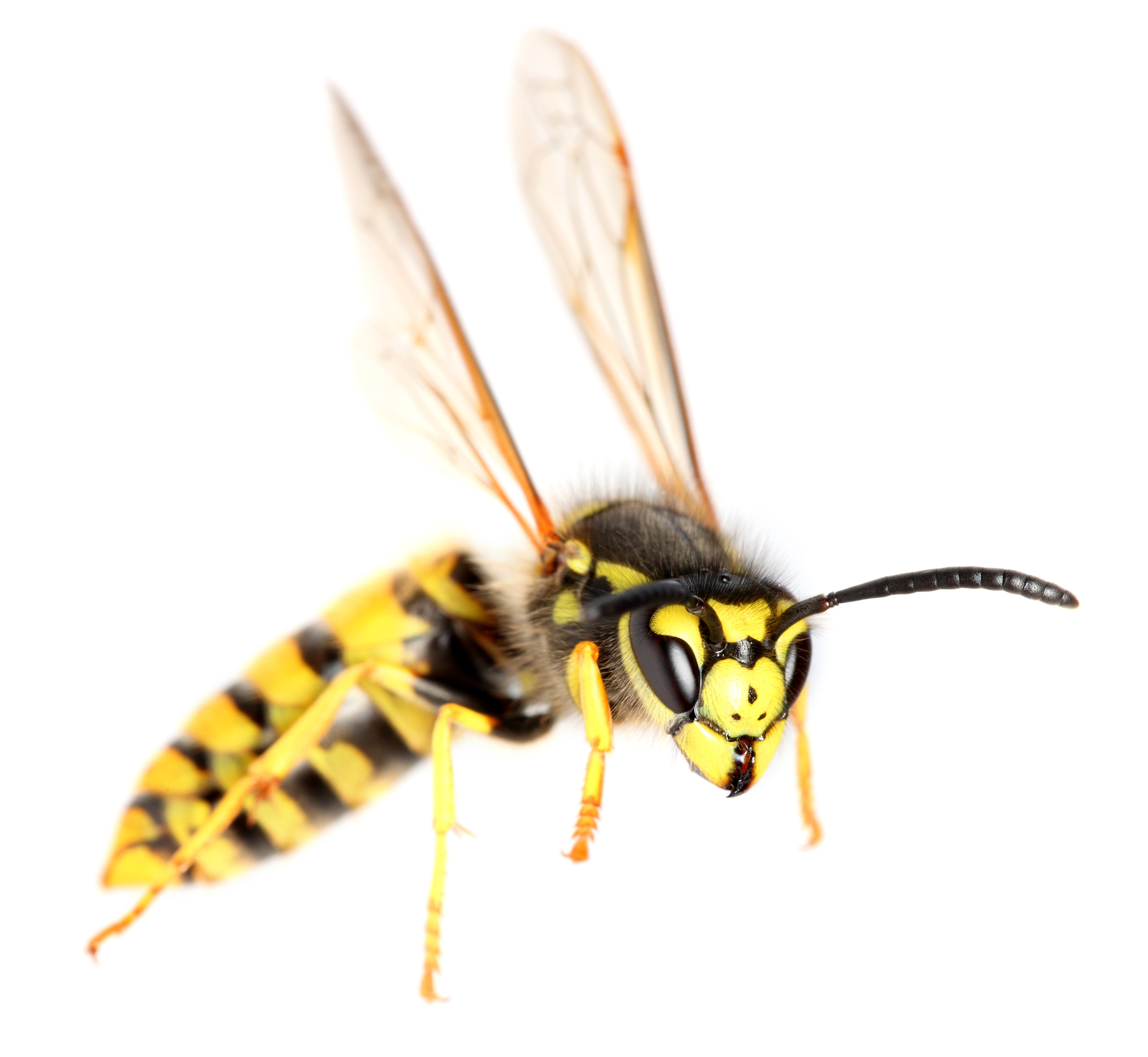
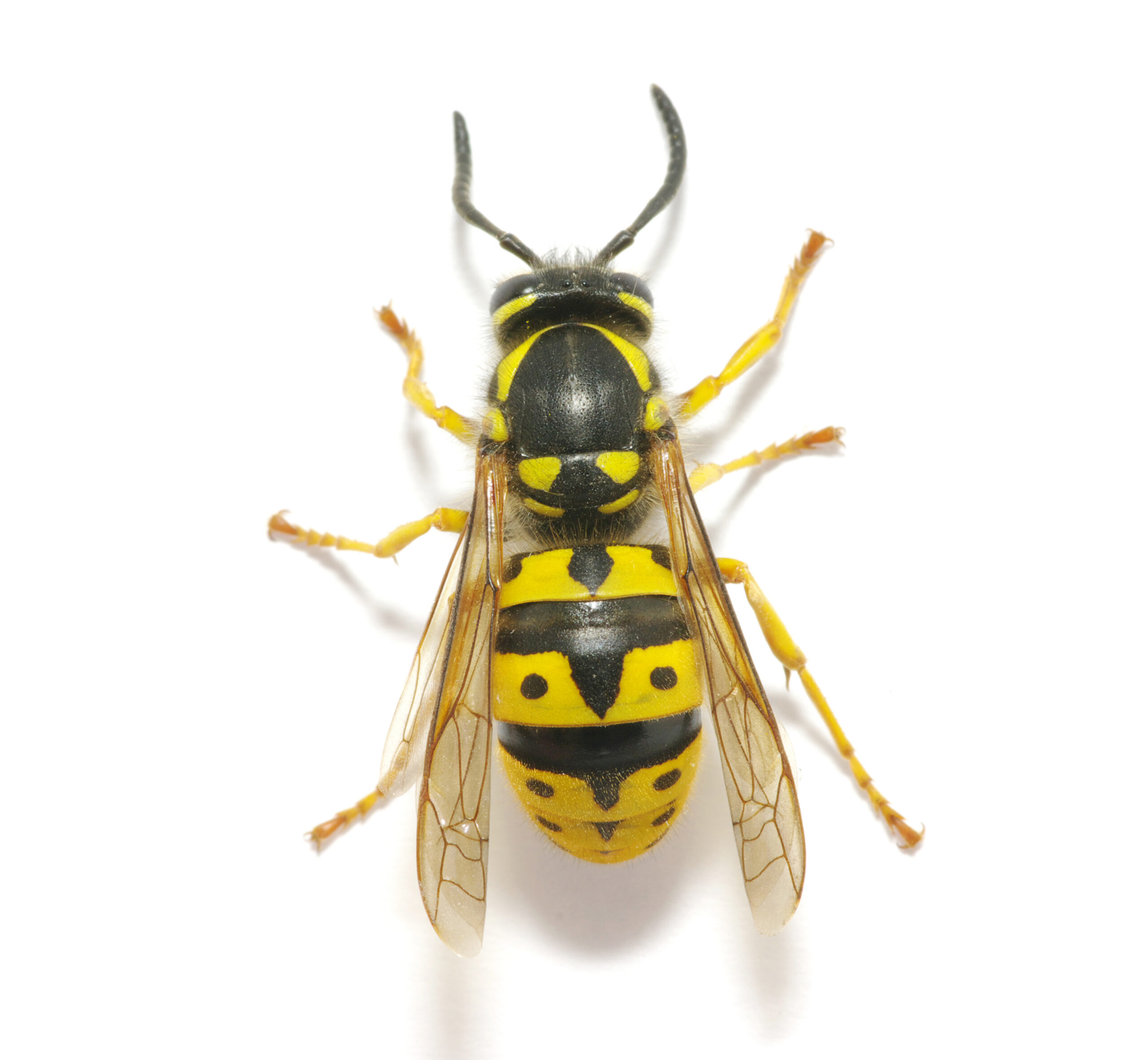
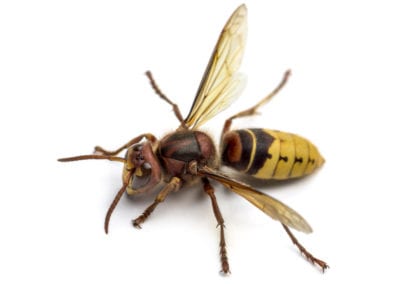
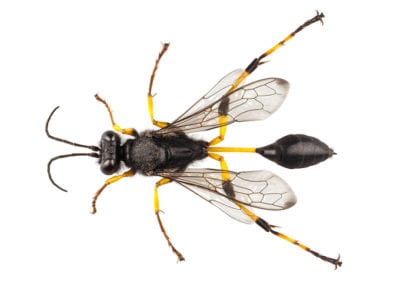
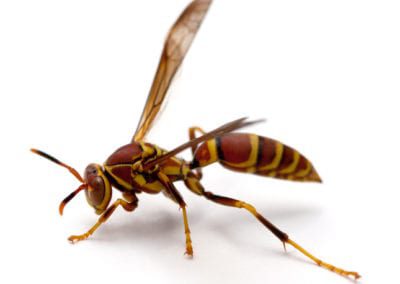
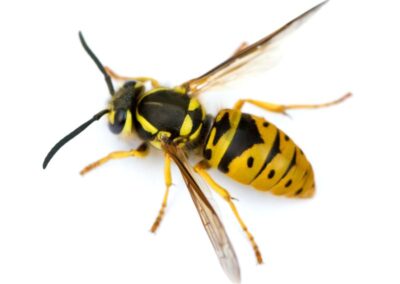
Yellowjackets are social wasps that live and work together in colonies. They are often mistaken for bees because of their yellow and black coloring, but yellowjackets have a smoother body, a more defined waist, and a much more aggressive temperament.
Unlike honey bees, yellowjackets can sting repeatedly without losing their stinger. When a nest is threatened, multiple workers may attack at once, making them a significant concern for families, pets, and anyone with allergies to insect stings.

How to Identify Yellowjackets
Several stinging insects are active throughout the Midwest, but yellowjackets have a few characteristics that set them apart:
- Bright yellow and black striped body
- Smooth, shiny appearance with little hair
- Narrow waist between body segments
- About one-half inch long
- Fast, darting flight pattern
- Frequently seen around food, beverages, and trash containers
Because they actively search for food around people, yellowjackets are often encountered at backyard cookouts, sporting events, festivals, and outdoor dining areas.
Where Do Yellowjackets Live?
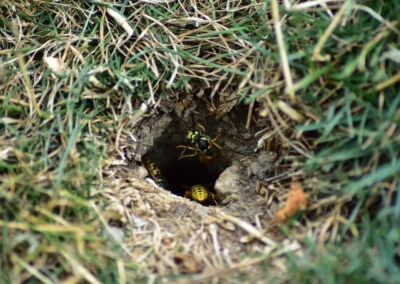
Many yellowjacket species prefer to build nests underground. They commonly utilize abandoned rodent burrows, cavities beneath landscaping, or gaps in retaining walls.
Other nesting locations may include:
- Wall voids
- Attics
- Crawl spaces
- Sheds
- Garages
- Wood piles
- Dense shrubs
- Hollow trees
Many homeowners don’t realize a nest is present until they accidentally disturb the entrance while mowing, gardening, or performing yard work.
What Do Yellowjackets Eat?
Yellowjackets are opportunistic feeders whose diet changes throughout the season.
Common food sources include:
- Flies
- Caterpillars
- Spiders
- Other insects
- Sugary drinks
- Fruit and fruit juices
- Meat and protein sources
- Garbage
- Pet food
Late summer and early fall often bring increased yellowjacket activity because colonies are larger and workers spend more time searching for food.
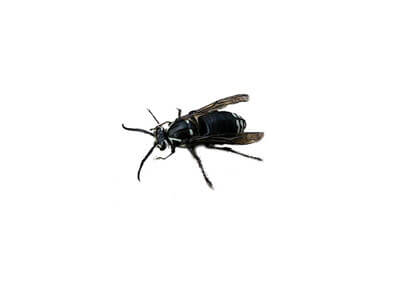
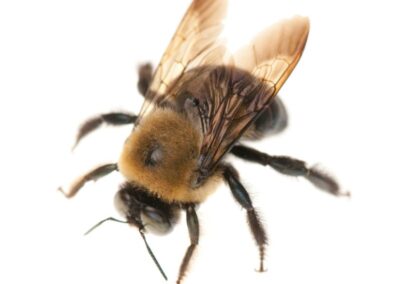
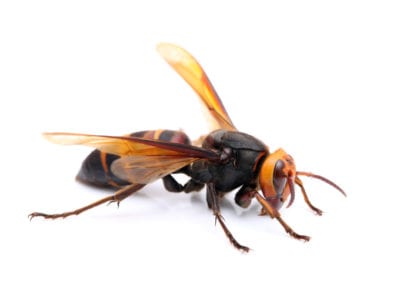
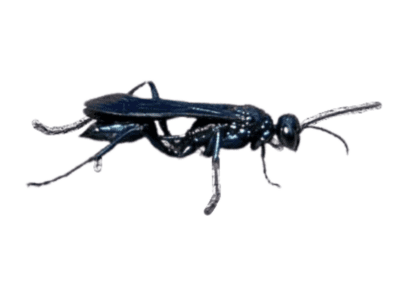
Is This Your Critter?
Maybe it is, maybe it isn’t. We can handle the identification and get you a solution to your problem quickly.
Get a remedy now. Send a message!

Signs You May Have a Yellowjacket Nest
Yellowjackets often reveal their nesting location through repeated activity.
Common signs include:
- Numerous yellowjackets flying to and from the same area
- Insects entering a hole in the ground
- Increased activity around trash bins
- Yellowjackets gathering around outdoor meals
- Stinging insect activity near decks or landscaping
- Buzzing sounds coming from walls or attic spaces
If you observe concentrated activity, avoid approaching the area and contact a pest management professional.
Frequently Asked Questions About Yellowjackets
Are yellowjackets bees or wasps?
Yellowjackets are wasps. Although they share similar colors with some bee species, they belong to a different group of insects and behave much more aggressively.
Do yellowjackets die after they sting?
No. Unlike honey bees, yellowjackets can sting repeatedly because they do not lose their stinger.
Are yellowjackets active all year?
No. Most colonies, expect the queens, die off after the first hard freeze. New colonies are established each spring by overwintering queens.
Why are yellowjackets worse in late summer?
By late summer, colonies have reached their largest size and workers spend more time searching for sugary foods and protein sources, bringing them into closer contact with people.
Can yellowjackets nest inside a house?
Yes. Some species build nests inside wall voids, attics, crawl spaces, and other protected areas of structures.
What should I do if I find a yellowjacket nest?
Avoid disturbing the nest. Keep children and pets away from the area and contact a pest management professional for assistance.
Are yellowjackets beneficial?
Yes. Yellowjackets are pollinators and help control populations of flies, caterpillars, and other insects. However, nests located near people often create safety concerns that outweigh these benefits.
How do I reduce yellowjacket activity?
Although prevention won’t eliminate every yellowjacket, reducing food sources and nesting opportunities can help make your property less attractive to these pests.
Helpful prevention measures include:
- Keep trash lids tightly closed
- Clean outdoor dining areas regularly
- Remove fallen fruit from trees
- Store pet food indoors when possible
- Seal cracks and gaps around your home’s exterior
- Inspect your property regularly for nest activity
- Minimize standing food as well as beverage spills outdoors
These simple practices can help reduce attractants throughout the season.
Schedule Professional Yellowjacket Control Today
Don’t let aggressive stinging insects keep you from enjoying your yard, patio, or outdoor events.
Franklin Pest Solutions has been protecting homes and businesses since 1929. If you’ve discovered a yellowjacket nest or are experiencing increased wasp activity around your property, our team is ready to help.
Call 1-800-GOT-PESTS? or contact us today to schedule your inspection and get a free quote for yellowjacket control in Southwest Michigan, Indiana, and the Greater Louisville region.


Very responsive…very thorough!
“I Have been with Franklin for over 20 years. My parents were clients as well. When wasps decide to make their home near a front door, etc., they are very responsive. Mark is the best and very thorough!”
PB. | Homeowner in Hammond, Indiana
You’ve got a pest problem. We’ve got your pest solution.
Whether you’ve got wasps, rodents, spiders (or you name it), we can assist with your pest problem. We can even provide same-day service. Drop us a line to schedule your pest control services today!

Safe For Your Family and Business
We’re licensed, trained, and certified by the Departments of Public Health and Agriculture, using safe, EPA-regulated materials, always.
Attacking Infestations at the Root
We don’t come in spraying. We evaluate the root of your problem, and recommend and enact pre-emptive measures before any chemicals are used.
Assessments Before Any Contracts
Our Customer Care Center walks you through every service, every charge, and every solution before you agree to anything. Our commitment is to you.