
You’re relaxing outside with a meal when an uninvited guest starts buzzing around your food. You shoo it away, but before long, another yellow and black insect shows up looking for a bite.
Sound familiar?
As summer winds down, wasps and other stinging insects become much more noticeable around backyards, patios, parks, and outdoor gatherings. It can feel like they suddenly become more aggressive this time of year, but there are a few reasons behind the uptick in activity.
Let’s answer some of the stinging insect questions we hear most often in late summer and explain what homeowners should know about wasp behavior, identification, and wasp control.
Do Wasps Serve a Purpose?
Wasps are an important part of the ecosystem. As they search for nectar, some species help pollinate plants, while others help keep insect populations in check by hunting prey. Their predatory behavior also provides food for developing larvae back at the nest.
Problems can arise when wasps establish nests close to patios, play areas, entryways, or other places people frequently use. While their stingers are primarily used to subdue prey, wasps may also sting to defend themselves or their colony when they perceive a threat.
Why Do Wasps Seem More Aggressive in Late Summer?
Wasps aren’t suddenly getting angrier as summer winds down. Their colonies are simply much larger, and more workers are out searching for food.
During spring and early summer, queen wasps establish nests and lay eggs as the colony steadily grows. By late summer, a mature colony may contain hundreds or even thousands of workers actively foraging each day.
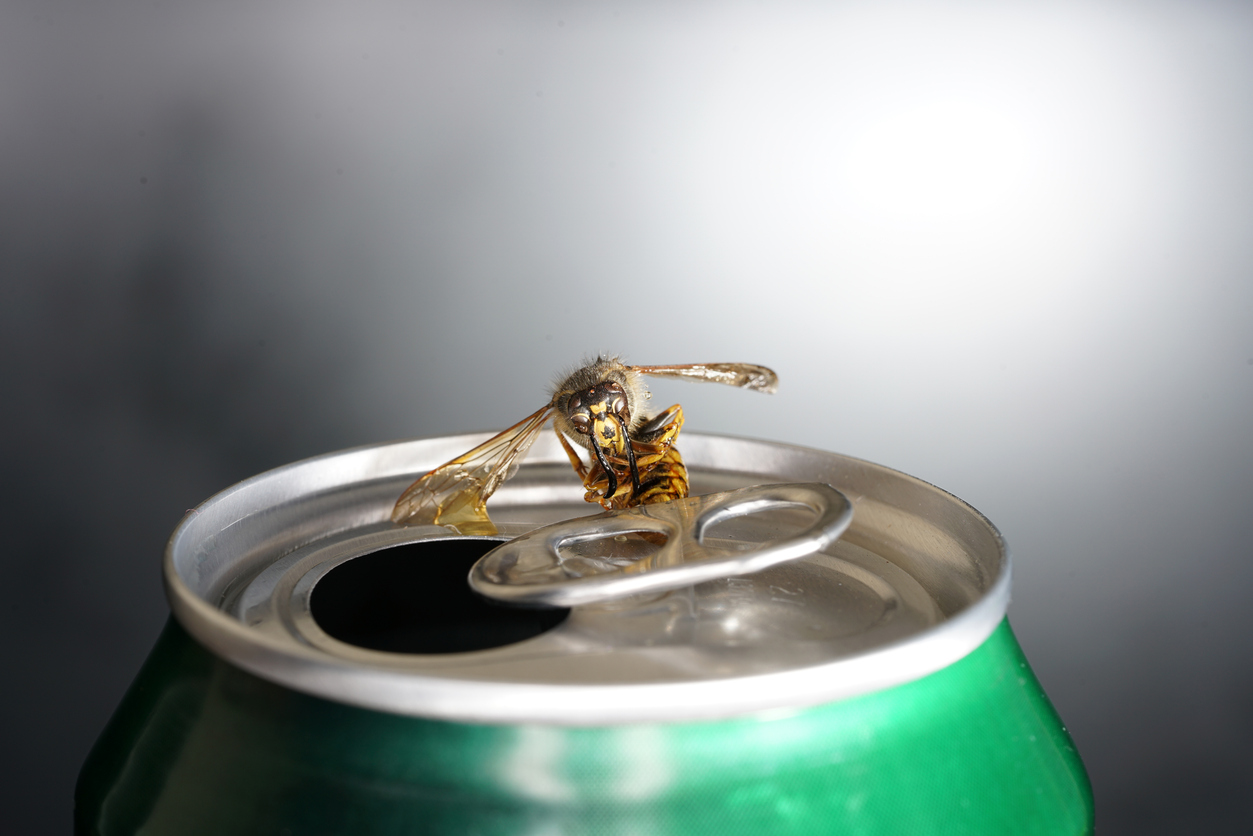
Food sources also begin to change as the season progresses. With less nectar available from flowering plants, wasps become more interested in the foods and sugary drinks they find around people. Grilled meats, ripe fruit, soda, pet food, and uncovered garbage can all attract their attention. This increased competition for food, combined with large colony populations, is why wasp activity can feel especially intense around homes and outdoor gatherings in late summer.
What Kind of Stinging Insect Is in Your Yard?
Several types of stinging insects may be buzzing around your property, and knowing which one you’re dealing with can make a difference. Here are some of the species homeowners commonly encounter throughout the Midwest.
Yellowjackets
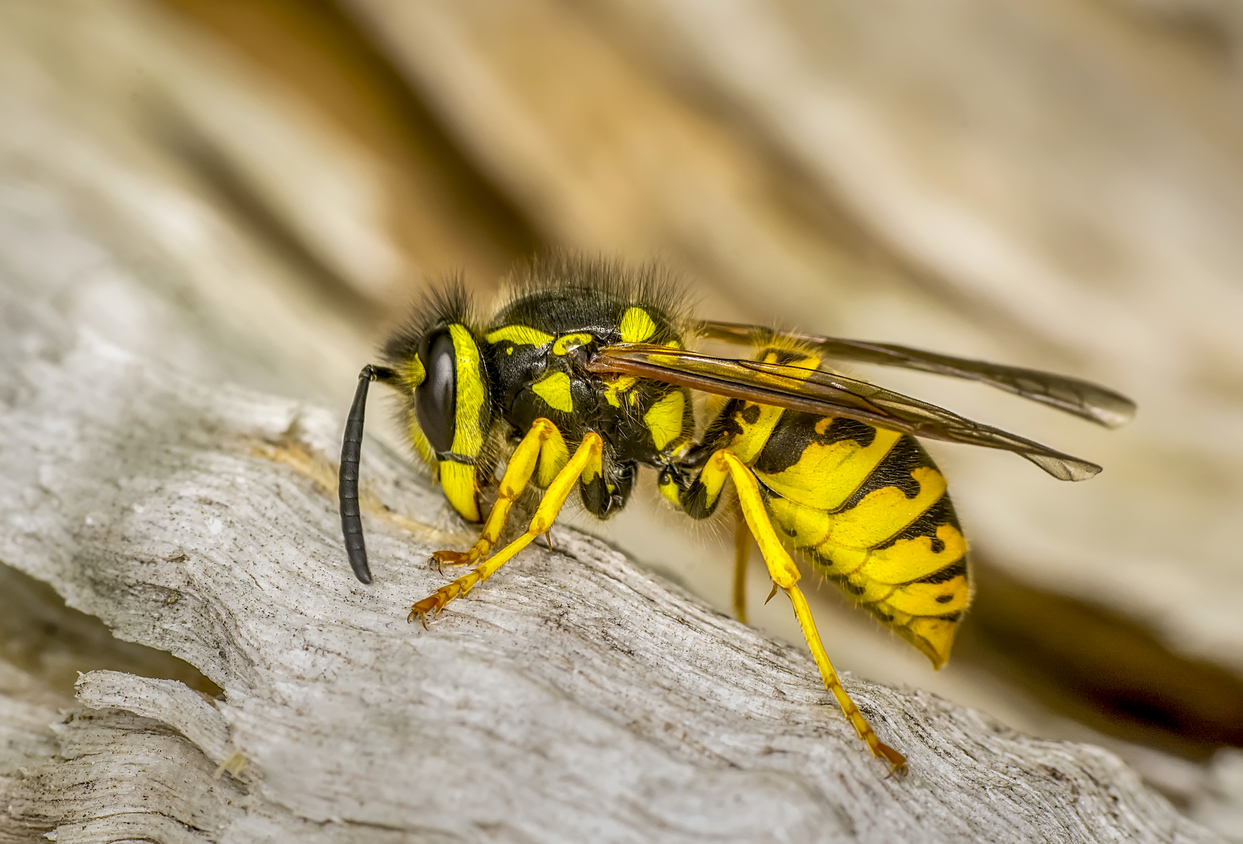
Yellowjackets are easily recognized by their bold yellow and black coloring and compact bodies. Unlike paper wasps, their legs remain tucked close to the body while flying. Colonies may be found underground, within wall voids, or in other protected spaces around a property.
These wasps are frequent visitors at picnics and outdoor gatherings because foods like meat, fruit, and sugary drinks provide an easy meal. Yellowjackets can aggressively defend both their colony and nearby food sources. Ground nests are especially easy to disturb accidentally. A lawn mower passing over a nest or someone walking too close to the entrance can trigger multiple workers to emerge and defend the colony.
Paper Wasps
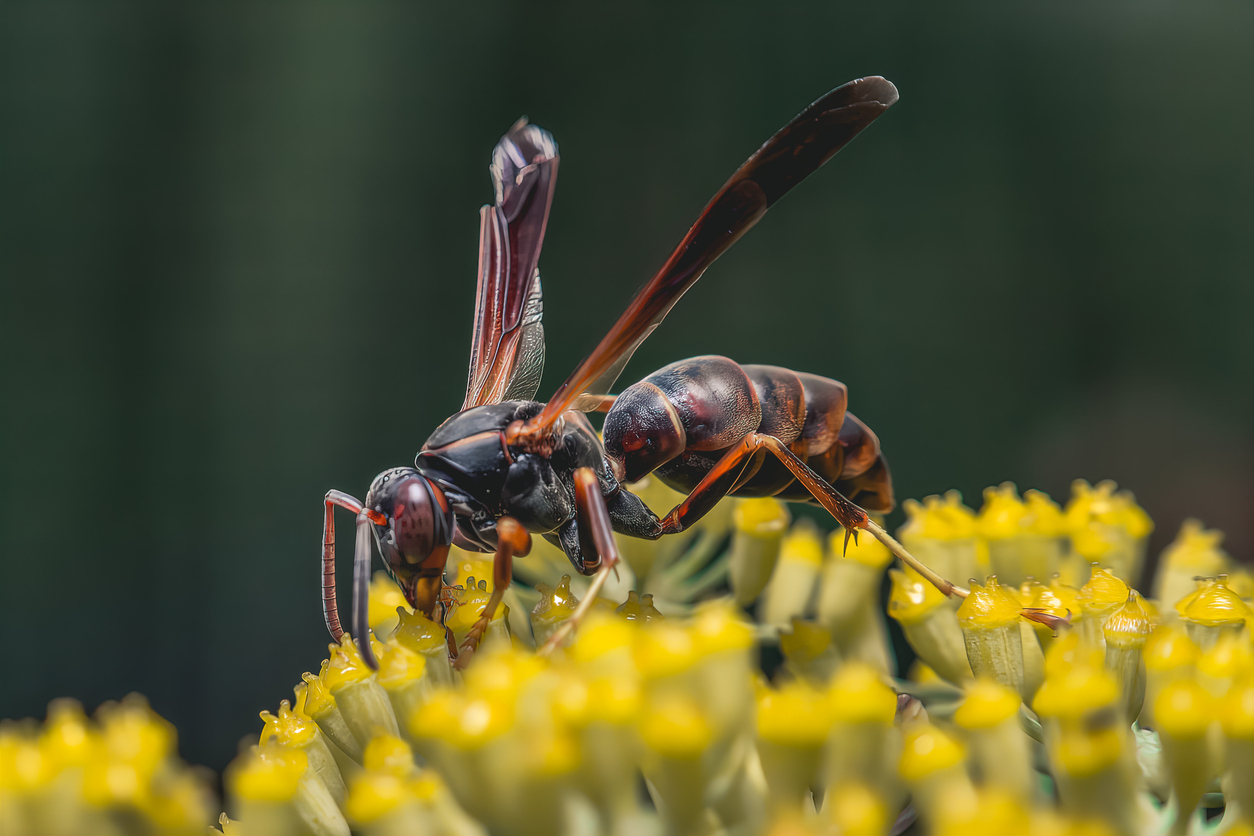
Paper wasps have narrow, elongated bodies with long legs that hang down noticeably during flight. Depending on the species, their coloring can range from mostly black or reddish brown to yellow and black, which can sometimes cause them to be confused with yellowjackets.
Their nests are usually easy to recognize. Paper wasps construct exposed, umbrella-shaped nests beneath eaves, decks, porch ceilings, shutters, and other sheltered areas. The individual cells where larvae develop remain visible. To build the nest, workers chew wood fibers and combine them with saliva to create the paper-like material.
Paper wasps are typically less defensive than yellowjackets, but they can sting when their nest is disturbed or when they become trapped against clothing or skin.
Bald Faced Hornet
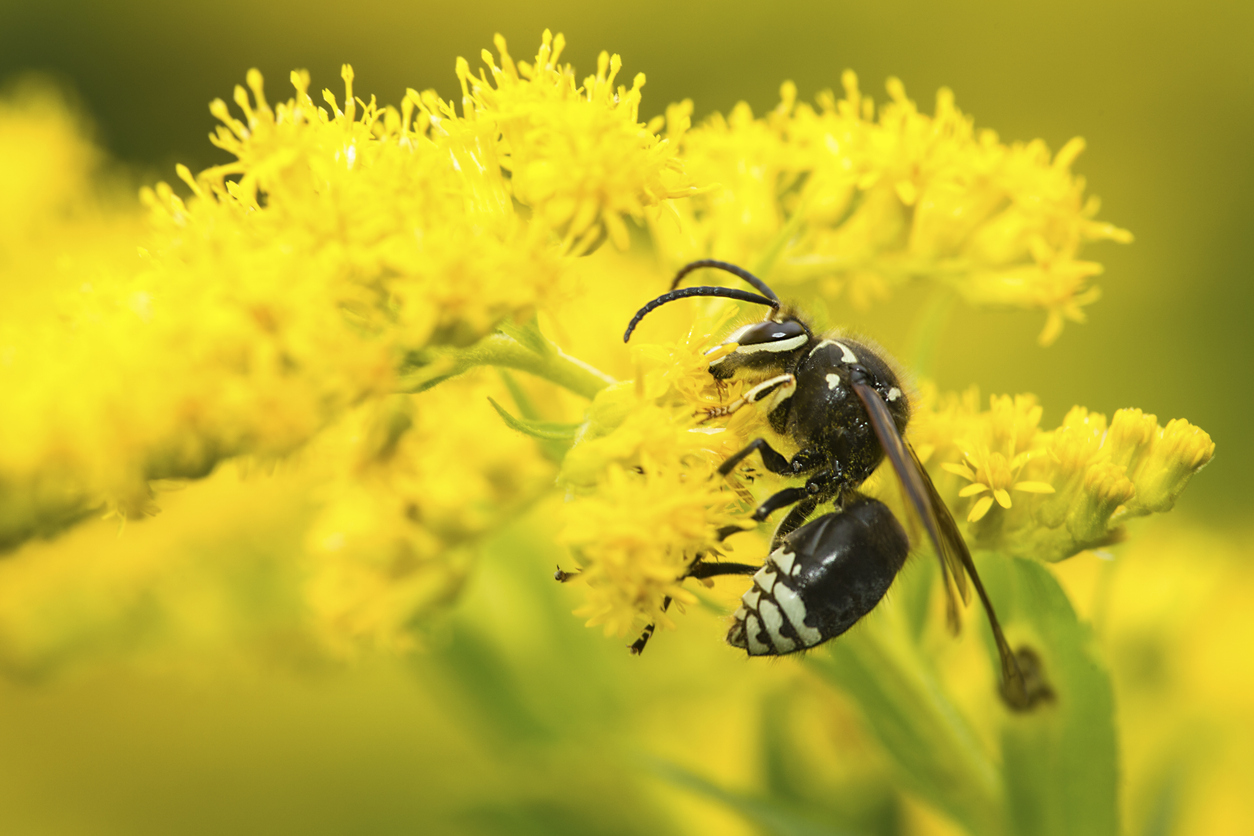
Bald faced hornets are striking black and white wasps named for the pale markings on their faces. They construct large, enclosed paper nests that are often football-shaped and found hanging from trees, shrubs, or occasionally structures around a home. Unlike paper wasp nests, the individual cells are hidden inside the outer paper covering.
These wasps can be highly defensive when their colony is disturbed. If you discover a bald faced hornet nest on your property, keep your distance rather than attempting to knock it down or treat it yourself. A pest control professional can determine the best approach for removal.
Honey Bees
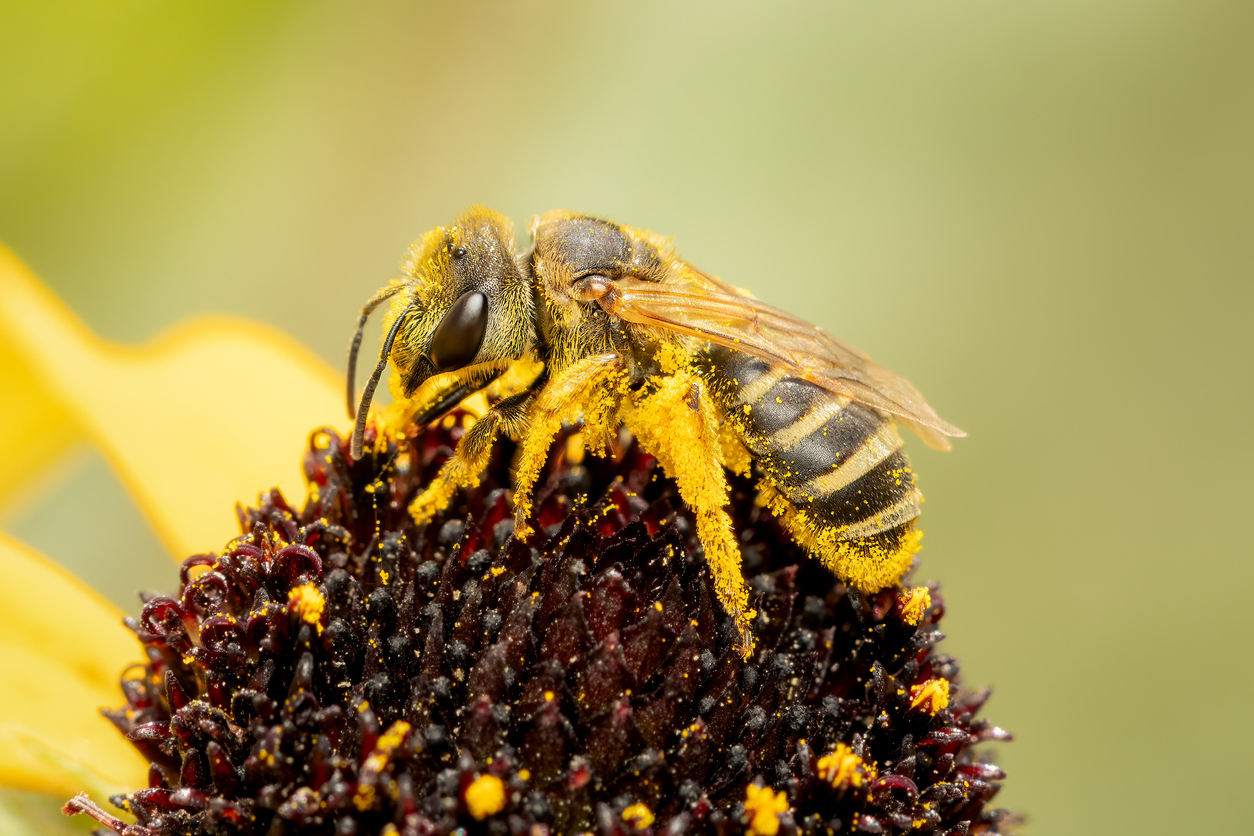
Honey bees are fuzzy, golden-brown insects commonly seen traveling from flower to flower in search of nectar and pollen. They are generally less defensive than wasps and usually sting when they feel threatened or need to protect their colony.
Unlike wasps, worker honey bees have barbed stingers. When a honey bee stings a person, the stinger can become embedded in the skin and tear away from the bee as it flies off, causing injuries that ultimately kill the bee.
Honey bees are valuable pollinators that support many of the plants and crops we depend on. When an established colony is found in or around a structure, relocation should be considered whenever possible. Their nests are made of wax rather than paper and contain recognizable hexagonal combs, often built inside protected spaces such as hollow trees or wall voids.
Can Wasps Recognize You? Let’s Bust Some Common Myths
Wasps have earned quite a reputation, and that has led to plenty of myths about what they can and can’t do. Let’s take a closer look at some common claims and what we actually know about wasp behavior.
Myth: Wasps can recognize your face and come after you later.
Fact: Research suggests that some paper wasp species have impressive recognition abilities, including distinguishing between members of their own species and remembering certain visual patterns or faces. That doesn’t mean a wasp around your home has singled you out or is holding a grudge. If one repeatedly flies toward you, you may be too close to its nest or have food or a sugary drink that has caught its attention.
Myth: Wasps know when you’re afraid of them.
Fact: Wasps can’t sense fear, but they can respond to quick or threatening movements. When one buzzes close to your face, your first reaction may be to swat, duck, or wave your arms. Those sudden movements, or getting too close to a nest, are more likely to trigger defensive behavior. If a wasp is nearby, avoid swatting at it and calmly move away when possible.
Myth: Killing a wasp will cause others to come after you.
Fact: In some situations, it can. Certain wasps release alarm chemicals when they are threatened or crushed. Other members of the colony may detect these signals and respond defensively, especially when you’re close to their nest. This is another reason attempting DIY wasp control or nest removal can quickly become risky.
Myth: You can escape wasps by jumping into the water.
Fact: Not necessarily. If wasps are defending a nest nearby, jumping into a pool may not end the encounter. They can remain in the area while you’re underwater and may still behave defensively when you resurface. Getting wet doesn’t change whether a wasp perceives you as a potential threat.
Is DIY Wasp Nest Removal a Good Idea?
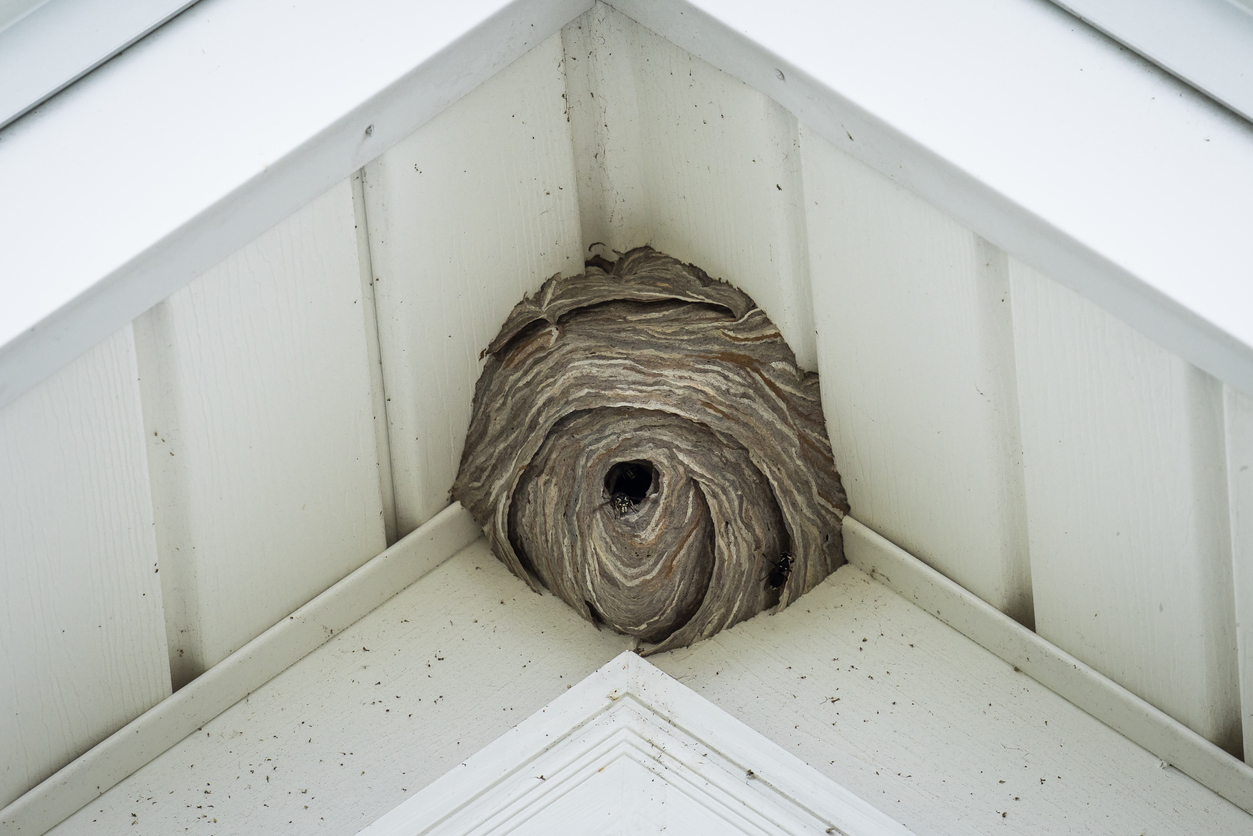
Trying to remove an active wasp nest on your own can put you in direct contact with a defensive colony. Disturbing, spraying, or knocking down a nest may cause multiple wasps to emerge and sting. When wasp control is needed, keeping your distance from the nest is the best first step.
Not every nest requires immediate treatment. For example, a small paper wasp nest in a rarely used area of the property may be able to remain undisturbed. Location matters. Nests near entryways, patios, decks, play areas, or other frequently used spaces are more likely to create problems for people and pets.
If a nest is located in a high traffic area, professional wasp control can determine which species is present, find the source of the activity, and recommend the most appropriate treatment for the situation.
Take Back Your Backyard From Stinging Insects
If wasps have become regular visitors around your home or you’ve discovered a nest near an area your family uses, Franklin Pest Solutions can help. Our wasp control experts can identify the species, find the nest, and recommend the right treatment for your property.
Spend less time watching out for stingers and more time enjoying your backyard while summer lasts.