
Pantry Pests: What’s Really Getting Into Your Food (and How to Stop Them)
Your pantry should be a place of comfort — stocked with family favorites, baking staples, and everyday essentials. Unfortunately, it’s also one of the most common places pests find exactly what they need to survive.
From moths hiding in flour to rodents sniffing out pet food, pantry pests are sneaky, persistent, and far more common than most homeowners realize. The good news is that prevention starts with knowing what you’re up against and taking a few smart steps early.
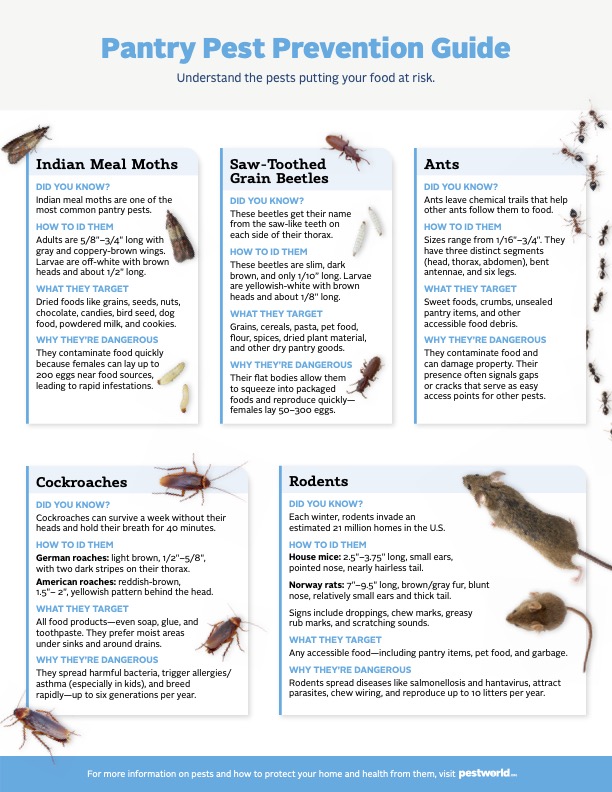
Use the Pantry Pest Prevention Guide below as a visual reference to identify common pantry pests, understand what attracts them, and learn why quick action matters.
Common Pantry Pests Found in Homes
Even clean, well-maintained homes can experience pantry pest activity. These pests are often brought in unknowingly through grocery items, deliveries, or small gaps around the home.
Indian Meal Moths
One of the most common pantry pests, Indian meal moths are often noticed flying near cabinets or ceilings. Their larvae infest dry foods like cereal, flour, grains, chocolate, nuts, pet food, and bird seed. Because females can lay hundreds of eggs near food sources, infestations can spread quickly if not addressed early.
Saw-Toothed Grain Beetles
These tiny beetles are slim, flat, and excellent at squeezing into packaged foods. They’re commonly found in pasta, flour, spices, cereals, and other dry goods. Their small size makes them easy to miss until populations build up.
Ants
Ants are attracted to crumbs, sweet foods, and unsealed containers. Once one ant finds a food source, it leaves a chemical trail that leads others directly to it. Seeing ants in the pantry often signals an entry point somewhere nearby.
Cockroaches
Cockroaches are drawn to food, moisture, and warmth. They’ll feed on nearly anything, including food products, toothpaste, and soap. Beyond being unpleasant, they can spread bacteria and trigger allergies or asthma, especially in children.
Rodents
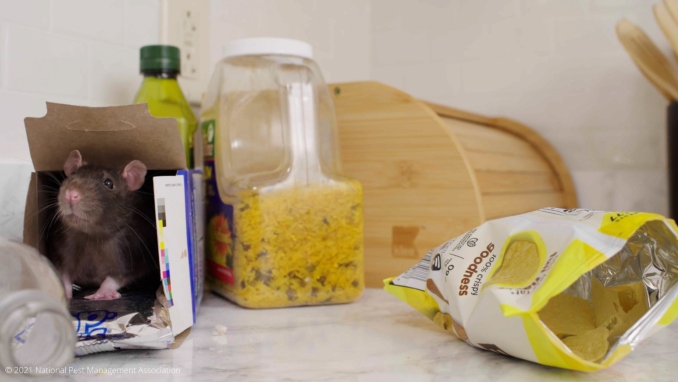
Mice and rats will eat almost anything accessible, including pantry items and pet food. They contaminate food, spread disease, damage wiring, and reproduce rapidly. Pantry activity is often just one sign of a larger rodent issue inside the home.
Why Pantry Pests Shouldn’t Be Ignored
Pantry pests are more than a nuisance. Once food is contaminated, it should be discarded. Many of these pests reproduce quickly, which means a small issue can turn into a widespread infestation in a short amount of time.
Repeated sightings, damaged packaging, droppings, larvae, or webbing inside food containers are all signs that pests have moved beyond a one-time incident.
Simple Steps to Prevent Pantry Pests
The prevention tips shown in the guide are simple but effective when done consistently.
Maintain cleanliness by wiping down shelves, sweeping floors, and cleaning up spills immediately. Pulling appliances away from walls occasionally helps remove hidden crumbs.
Store food properly in airtight containers, including pet food. Dispose of garbage regularly and avoid leaving food out overnight.
Inspect regularly by checking pantry items for signs of pests and removing expired food. Inspect grocery bags, boxes, and deliveries before storing them.
Seal entry points by closing gaps around doors, windows, pipes, and utility lines. Even small openings can allow pests access.
Eliminate moisture by fixing leaks, clearing clogged drains, and checking under sinks for damp areas that attract pests.
When to Call a Professional
If you’re seeing recurring pantry pests or signs of rodents or cockroaches, it’s time to bring in a licensed pest control professional. Some pests pose health risks, and pantry pests can spread faster than most homeowners expect.
Professional pest management focuses on identifying the source, stopping active infestations, and preventing future issues — not just treating what you can see.